
Istanbul and the Magic of History
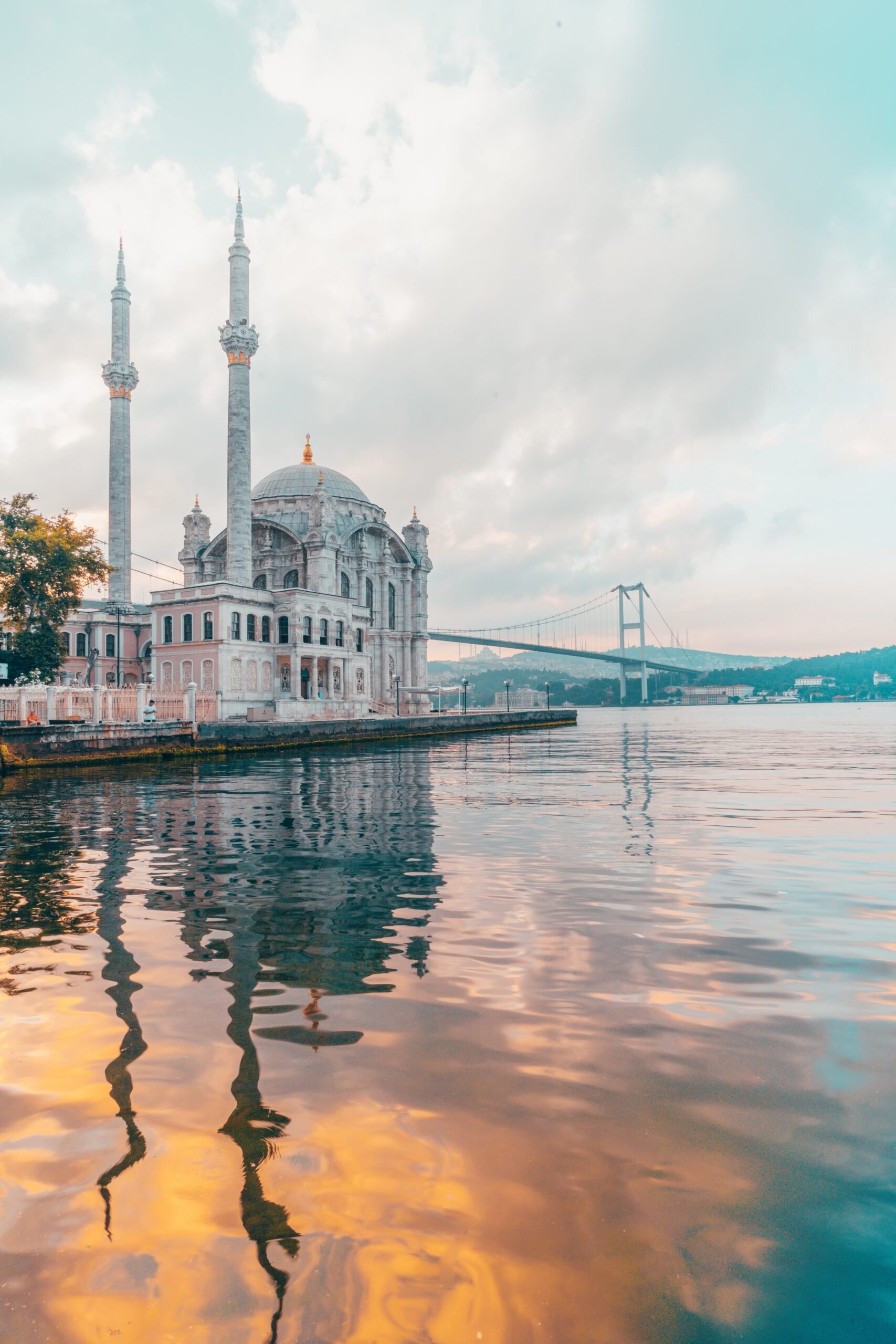
“Istanbul, ah Istanbul – benim güzel Istanbul’um. “
If you're wondering what I just said, it's Turkish for my beautiful Istanbul. This destination is the closest to my heart - it is my home, and a defining part of who I am. Which is why I won't be writing about Istanbul as a traveller, but as someone who has spent nearly their entire life there.
I'd love to say I know Istanbul inside out - but I know for a fact that's impossible. In truth, I don't believe anyone can. I've spent over 20 years exploring this city and still have so much left to discover.
Istanbul may not be the capital of Turkey, but it has always been a capital of history - a capital of empires and civilizations. Don’t be fooled by the lights or the modern architecture. Istanbul existed long before modernity, reaching back beyond what most of us even imagine, all the way into ancient times. And through every era, one thing has stayed the same: it’s a city of people - the heart of their humanity, and the keeper of their history. (Yes, I know those are big words - but I truly believe them.)
We rarely stop to think about history in our day-to-day lives. We are consumed by the present, and perhaps even more so by the future. But I want to invite you to pause for a moment, to step back and feel the quiet magic of history around you. We are each just a point in time. We arrive, we live, and eventually we make way for those who come after us. Life and death are the simplest, purest cycle there is - they bring change, and through change, growth. But time itself? Time is constant. You and I will pass through it, living out our years, while everything around us endures.
This is why history has always fascinated me. It reminds me that I will live my life and one day leave this earth but history will remain. It will carry on long after I'm gone. History, I believe, is the one truly immortal thing in this world. And isn't that exactly why we all want to make history? So that our names live on. So that in some small way, we become immortal.
I'd wager you feel the same. Deep down, we all want to become legends. I don't know where the story of Zeus first began, but his name has echoed through millennia. The same goes for Osiris, for Thor. They were once human then they became gods, and now they are eternal legends. Perhaps Istanbul, with all its layers of history and myth, understands this better than anywhere else on earth.
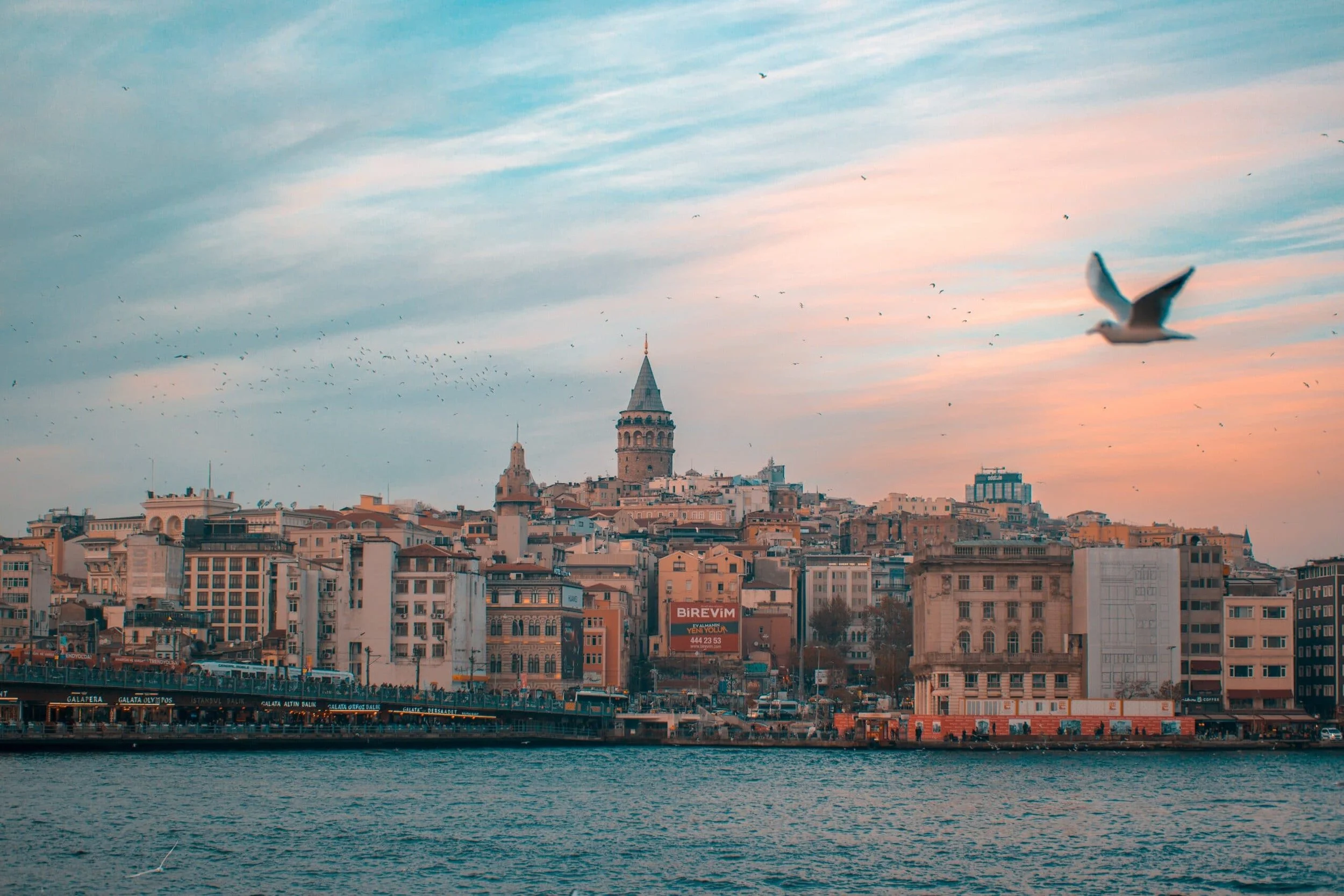
Want to feel the extraordinary in the ordinary everyday?
Allow yourself to take in the beauty of history. I believe we are all the same. We may have some different colours and shade but at its core humanity is one and a same. Those who we now come to know as legends were once just like you and me. Alexander the Great was just another man who lead his people, Aristotle was just another man who contemplated his life, Leonardo Da Vinci was just another man that enjoyed painting. It is simple to become a legend if we choose to.Let history inspire you.
But let's come back to Istanbul, because Istanbul deserves to be come back to.
Can you guess how old this city really is? How long has civilisation taken root and grown on its soil? Go ahead, take a guess. Now double it.
Still not enough.
Istanbul is old. Older than most cities you will ever set foot in. The earliest traces of humanity found here date all the way back to the 6th millennium BC. For those of us who don't naturally think in millennia, let me put that into perspective: we are talking about 6,000 years before Jesus walked the earth. Six thousand years before that, people were already here, living, building, and shaping the land that would one day become one of the greatest cities in the world.
And what were they doing here, these earliest settlers? They were quietly, unknowingly, carving the road toward one of the most important turning points in all of human history - the Neolithic Revolution. In simple terms, this was the moment humanity made its great shift from hunting and gathering to agriculture and settlement. It may not sound like much at first, but think about what that single change set in motion. We stopped roaming. We put down roots. We formed tribes, and those tribes grew into city-states, and those city-states eventually became the countries we live in today. The entire architecture of modern civilisation can be traced back to that one fundamental decision = to stay.
Istanbul was there at the very beginning of that decision.
Remarkably, much of this Neolithic heritage was lost to sight for thousands of years, not through war or destruction, but through nature itself. As the world shifted geographically and climatically, rising water levels swallowed these ancient settlements whole, burying them beneath layers of water and earth and time. Hidden, but not gone.
And this is where the story takes a wonderful turn. While it had long been suspected that Istanbul's history stretched back further than the records showed, it wasn't until the last decade that it was truly confirmed, and in the most unexpected of ways. During the construction of the Yenikapı Subway, workers digging beneath the city didn't just find earth. They found history. Layer upon layer of it, perfectly preserved beneath the surface, waiting patiently to be discovered, as if Istanbul itself had been keeping its own secrets, knowing that one day, someone would finally think to look.
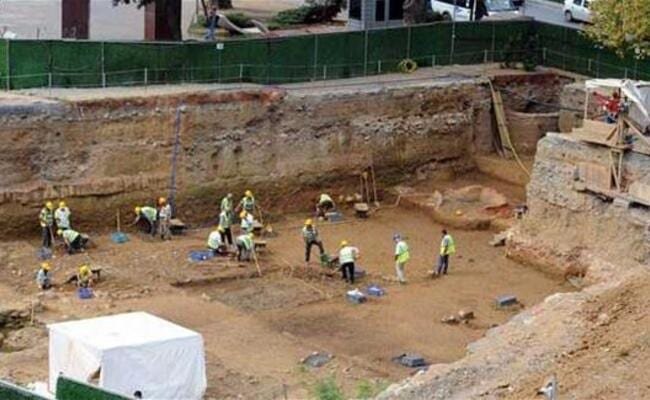
And this is where the story takes a wonderful turn.
While it had long been suspected that Istanbul's history stretched back further than the records showed, it wasn't until the last decade that it was truly confirmed, and in the most unexpected of ways. During the construction of the Yenikapı Subway, workers digging beneath the city didn't just find earth. They found history. Layer upon layer of it, perfectly preserved beneath the surface, waiting patiently to be discovered, as if Istanbul itself had been keeping its own secrets, knowing that one day, someone would finally think to look.
The city was already accumulating lives and stories long before it had a name the world would remember.
Thracian tribes were said to have established settlements in the region, known as Lygos and Semistra around 1000 BCE (I know, wild ?!), both believed to be located within what we now call Istanbul. Evidence for this was not found, only a legend passed down through time, whispered rather than written in stone. And perhaps that makes it even more fitting for a city that has always existed somewhere between myth and reality.
The first recorded chapter of Istanbul begans in 675 BC, when the city was founded under the name Byzantium: a name gifted to it by King Byzas, a Megarean colonist who clearly had a flair for the dramatic. And where there is a king with a flair for the dramatic, mythology is never far behind.
Hesychius of Miletus, a 6th-century writer and one of the earliest chroniclers of the city, recorded multiple myths surrounding the founding of Byzantium in his historic work, the Patria. Now, when it comes to mythology, I have a very simple approach, I pick the version I love most and I believe it wholeheartedly. And my favourite myth about Byzantium tells the story of King Byzas as the son of none other than Poseidon himself, and a woman named Keroessa.
As anyone familiar with ancient Greek mythology will know, family trees from that era are, to put it politely, a little complicated. Keroessa was the daughter of Lo - a mortal woman whom Zeus had fallen deeply in love with. And as was always the case when Zeus fell in love, Hera was not far behind with her boundless, burning jealousy. Lo was banished from Ancient Greece and sent to the shores of the Golden Horn, where she gave birth to her children alone, in pain, and far from everything she had known. Among those children was Keroessa.
Keroessa never forgot what had been done to her mother. And in her fury at the gods, she raised her son King Byzas with a singular purpose, to return and claim the very lands from which his grandmother had been cast out. There is something poetic about that, isn't there? A city born not just from ambition or strategy, but from a mother's rage, and yearning to get back home. Istanbul has always had fire in its roots.
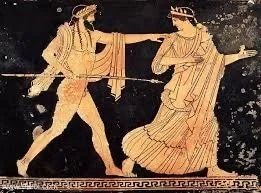
Zeus and Keroessa
King Byzas and his descendants ruled Byzantium for centuries, shaping and growing the city that would one day become one of the greatest in the world until the 5th century BC, when the Persians arrived and changed everything. They occupied the land, dismantling what had been so carefully built over generations.The Persian chapter, like all chapters, eventually came to a close. Around 470 BC, the Spartans swept in and took control and rather than leaving ruins behind, they rebuilt. There is something quietly remarkable about that. A city demolished, and then raised again, stronger and more beautiful than before. It is a pattern you will notice with Istanbul again and again throughout history. It does not stay down.
By 320 BC, Byzantium had passed into Athenian hands, continuing its journey through the great powers of the ancient world. And then came Rome. Under the reign of Emperor Septimius Severus, the city was restored to something approaching its former glory - expanded, embellished, and even temporarily renamed Augusta Antonina, a nod to the Emperor's son.
Different names, different rulers, different flags raised above its hills, and yet the city endured through all of it, quietly accumulating history with every passing century, as if it always knew what it was destined to become…
Constantinople
To truly understand why Istanbul has been fought over, conquered, rebuilt, and coveted by every great power in history, you need to look at a map. Turkey today stands as one of the most strategically significant geopolitical locations on earth; surrounded by sea, facing three continents, serving as a gateway between Europe, Asia and Africa. It is, quite literally, where worlds meet. It always has been.
Constantine the Great saw this. One of the greatest Roman emperors of all time, a man of vision and ambition, he didn't just recognise the strategic significance of Byzantium, he acted on it in the most extraordinary way. It is said that Constantine was guided to the city through a prophetic dream, in which God revealed to him the location of what would become the heart of the world. From that moment, his mission was clear. He took Byzantium, and from its ancient bones, he built the Eastern Roman Empire, an empire that would endure for the next thousand years. He named it Constantinople.
I think most of us have heard the name Constantinople at some point - it carries a certain weight, doesn't it? A legendary ring to it. Something that feels like it belongs in the pages of an epic. But here is the thing about legends, sometimes they are real. And sometimes, you grow up in them without even realising it.
I lived there.
The capital of the Eastern Roman Empire, the protector of the Ancient Roman Empire. Where I am from, we call it the Byzantine Empire - Bizans in Turkish. The empire that outlived the Western Roman Empire by a millennium is crazy. It was the cultural, political, and economic heart of Ancient Europe. Fun fact: the Byzantine Empire was one of the first empires to ever legalize Christianity and make it a state religion.
Although in its early years the empire had more of a Latin-Greek identity towards the end it morphed into a solemn Greek identity and become the heart of the Orthodox Church. Hagia Sophia, which still remains standing as beautiful as ever was the biggest worship architecture ever built at its time and remains to be for a millennia after its construction.
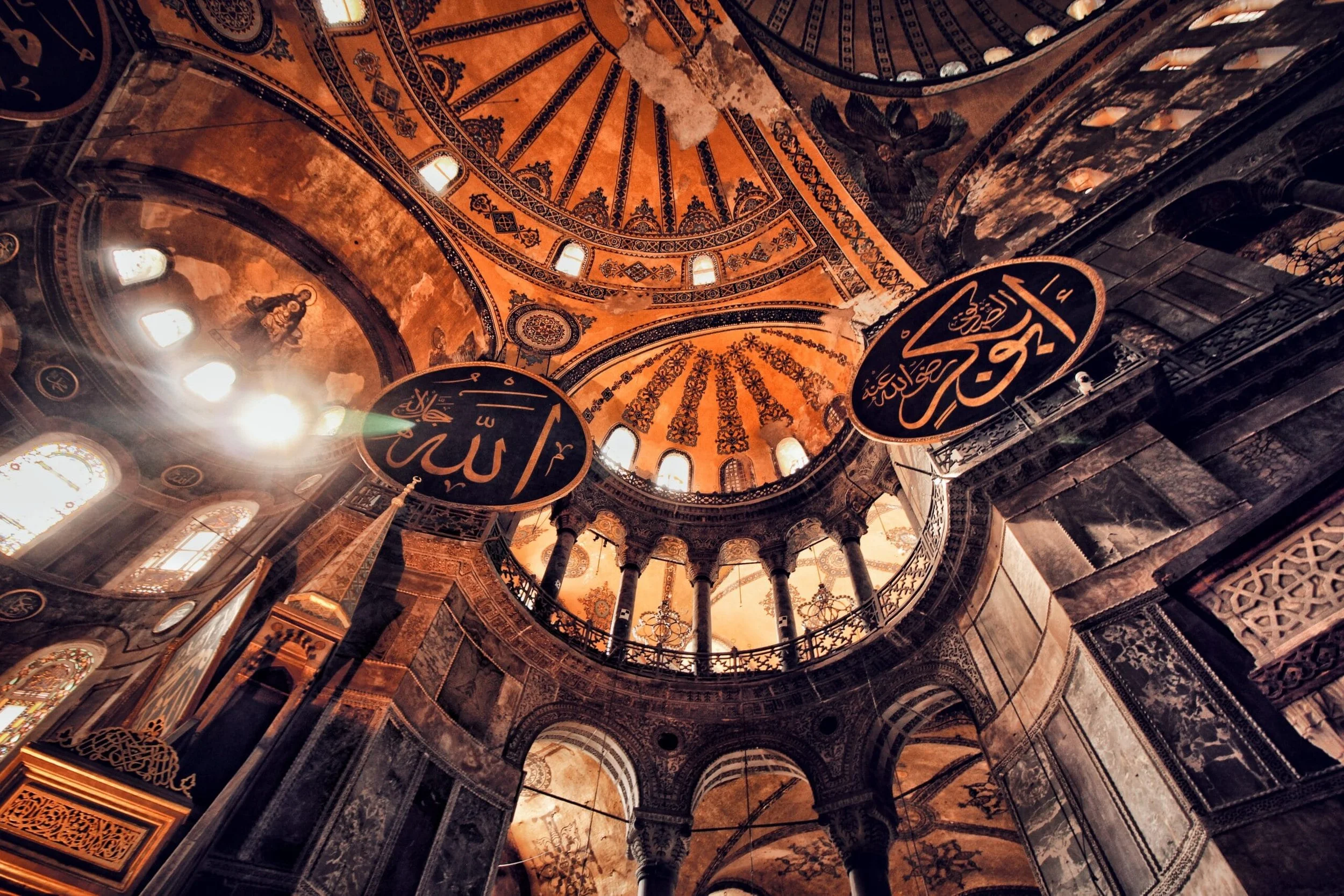
If there is one place you absolutely must visit on your trip to Istanbul, it is Hagia Sophia - and I won't take no for an answer on this one. Beyond its staggering architectural beauty, Hagia Sophia is a symbol of something far greater. Born as a church and later converted into a mosque when the Ottomans took Byzantium, it has spent centuries standing at the crossroads of two great empires and two great faiths. What makes its story truly remarkable though is the spirit in which that transition unfolded — when the Ottomans took over, they allowed people of all beliefs to continue practising their religions freely, choosing coexistence over conformity at a time when much of the world was tearing itself apart over faith. Hagia Sophia became, and remains, the living symbol of that philosophy. So go — not just to admire the domes and the light and the centuries of artistry surrounding you, but to stand inside a place that has meant so many things to so many people, and to feel the full weight of that history beneath your feet.
The Byzantine Walls
Constantinople was famous throughout the ancient world for its fortifications, and not just famous, but feared. It was said that no one could ever breach these walls, that they were the guard of God himself, protecting the Orthodox Church and all that lay within. And for over a thousand years, that held true. Countless outside forces tried. Armies that had conquered vast stretches of the known world arrived at these walls and turned back, defeated not by soldiers alone but by stone and mortar and an almost supernatural resilience. The fortifications were considered the strongest ever built, and I believe that entirely, because here is the thing that never fails to stop me in my tracks: the walls are still standing today.
You can go and see them. You can walk alongside them, run your hands along the stone, and feel the weight of what they have witnessed. I did, often, when I lived there. And every time I stand before them, something shifts in me. There is a magic in touching a wall that has been touched by a thousand years of hands before yours - soldiers, merchants, children, lovers, people who stood in that very same spot and looked out at a world entirely different from ours, yet felt, perhaps, something not so different from what you feel now.
I always find myself thinking, somewhere in those thousand years, there was a girl. Maybe she was even called Derya. And she pressed her hand to that same stone and wondered what the future would look like, just as I press mine and wonder about the past. We are separated by centuries but connected by that wall. We live, we die, the world shifts and changes around us but at our core we are the same, really. Wanting to live a great life, a happy life filled with magic - whatever that means at that time.
And those walls remain. Steady, constant, and impossibly still standing. Just like history itself reminding me of this magical fact.
Fatih Sultan Mehmet
Back to the story…The walls held. For centuries, they held. Empire after empire, sultan after sultan none could take Constantinople. The Ottoman Empire had surrounded the Byzantine capital for generations, close enough to see its domes and minarets gleaming on the horizon, yet never able to cross that final threshold. The walls, it seemed, truly were unbreakable.
Until Fatih Sultan Mehmet.
To understand what made him different, you first need to understand the Ottoman Empire's driving philosophy. Conquest. Expansion. More land, more power, more territory stretching toward every horizon. Every sultan before him had followed this same relentless objective, pushing the empire's borders further and further outward. It was simply the Ottoman way.
But Fatih Sultan Mehmet was not a typical Ottoman sultan. He was, in many ways, ahead of his time, a man of the Renaissance spirit born into a conquering dynasty. Where others saw war, he saw art. Where others counted land, he counted ideas. He was deeply inspired by science, culture, and the great civilisations of the West, and carried within him an intellectual curiosity that set him apart from every ruler who came before him. He spoke multiple languages, studied philosophy, and surrounded himself with artists and scholars.
And just like Constantine the Great centuries before him, he had a dream. Not a dream of expansion or plunder but a dream of destiny. He believed, with complete and unwavering conviction, that Constantinople was his to claim and that it would become the capital of the Islamic world. This wasn't merely ambition. It was a calling.
So rather than following in his ancestors' footsteps and pushing the empire's borders outward, he turned his gaze inward, toward that one magnificent, unconquerable city and set out to make his dream real.
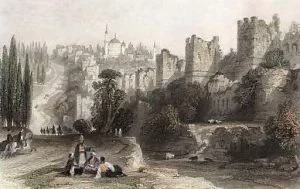
The walls back then
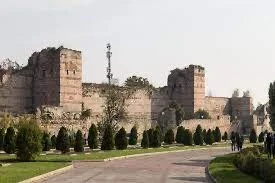
The walls today
His decision to take Constantinople was not met with celebration. His council thought him reckless, his people thought him dangerous, and many believed this young sultan and his grand dream would lead them all to ruin. Conquer Constantinople? The city that had never fallen? To most, it was an act of madness.
But Fatih Sultan Mehmet was no madman. He was something far more dangerous. He was patient.
He calculated every move with extraordinary precision, approaching the conquest not just as a ruler but as a scientist. He designed a mechanism capable of firing cannons directly at the ancient walls, the very walls that had withstood every assault for over a millennium. But there was a problem. Constantinople is surrounded by water on nearly every side, meaning any advancing army would be spotted long before it arrived, giving the Byzantines ample time to prepare. This was the impossible puzzle that had defeated every sultan before him.
So he did something no one had thought to do. He moved his ships over land. He engineered a system of wheels that carried his entire fleet over the mountains of outer Constantinople and down onto the Golden Horn, arriving from the one direction his enemies never thought to watch. The surprise was total. The siege lasted just 52 days. On the 29th of May 1453, Fatih Sultan Mehmet rode into Constantinople and the city that was said to be unbreakable finally fell.
A new chapter was about to begin.
From that day forward Constantinople became Istanbul. The capital of the Ottoman Empire and the heart of modern Turkey today.
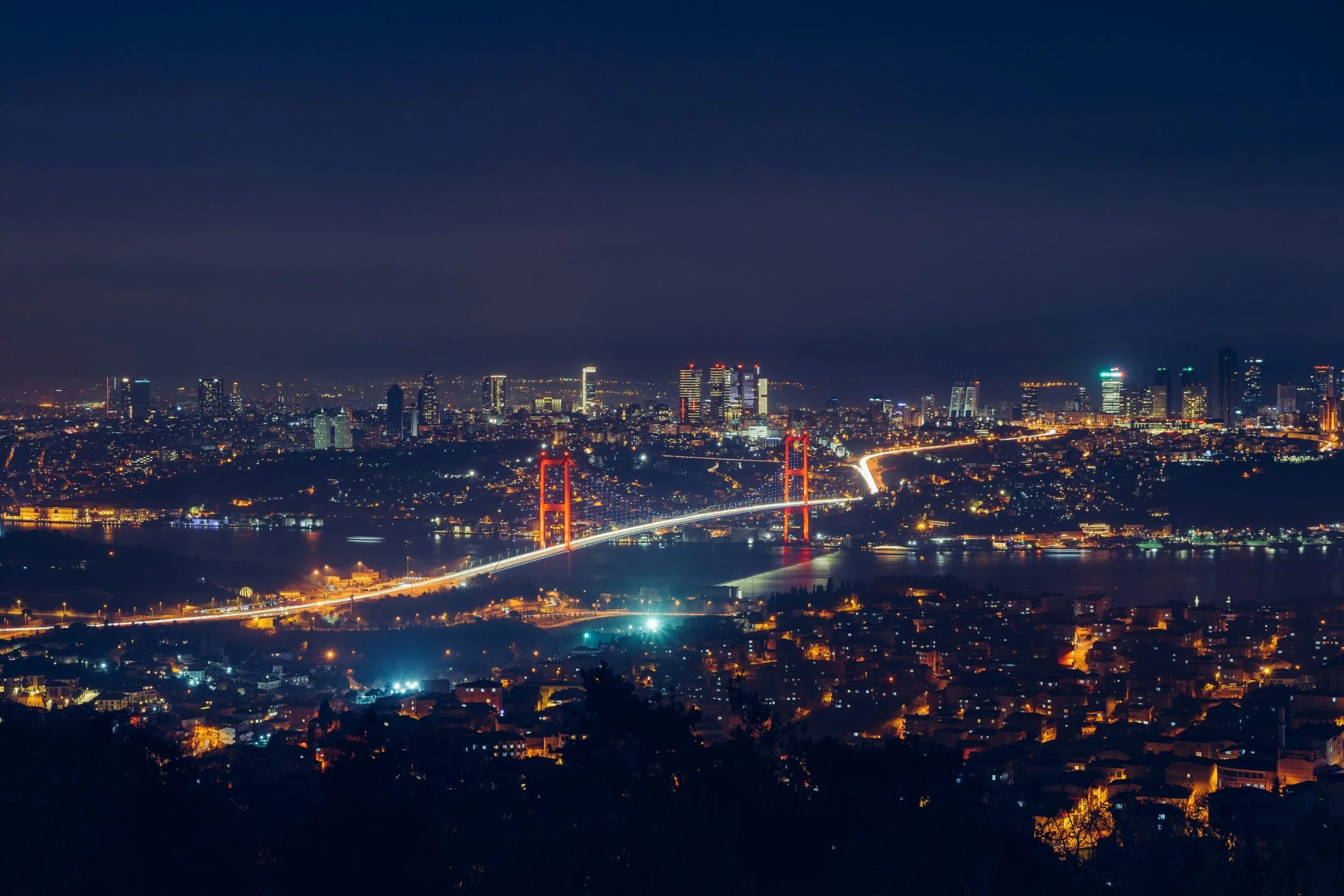
And so we arrive at the end of this story or rather, at the beginning of a thought I hope stays with you long after you close this page.
Everything you have just read: the empires, the conquests, the walls, the dreams, the prophetic visions of kings was once just ordinary life. Constantine wasn't a legend when he woke up and made his decisions. Fatih Sultan Mehmet wasn't a myth when he sat with his council and sketched out his impossible plan. They were people. Flesh and blood, doubt and ambition, fear and conviction. They were, in every way that matters, just like you and me. And yet the choices they made in their ordinary days became the extraordinary history we now read about in awe, press our hands against, and travel thousands of miles to witness.
That is the magic. History was never extraordinary when it was happening. It only becomes extraordinary with time.
Which means that you, right now, today, are living through something that the future will one day consider remarkable. The choices you are making, the life you are building, the person you are becoming; all of it is history in the making. We tend to wait for permission to be extraordinary, to be legends, to matter. But Zeus was once just a man with a story. Byzas was once just a boy with a mother's fury behind him. Every myth you have ever heard began as someone's ordinary Tuesday.
So why wait for the future to decide that your life was magical? It already is. You already are. The only difference between us and the legends is that they chose to see it that way while they were still living it.
Be the legend now. Istanbul taught me that.
Some legendary places you might want to stop by in Istanbul
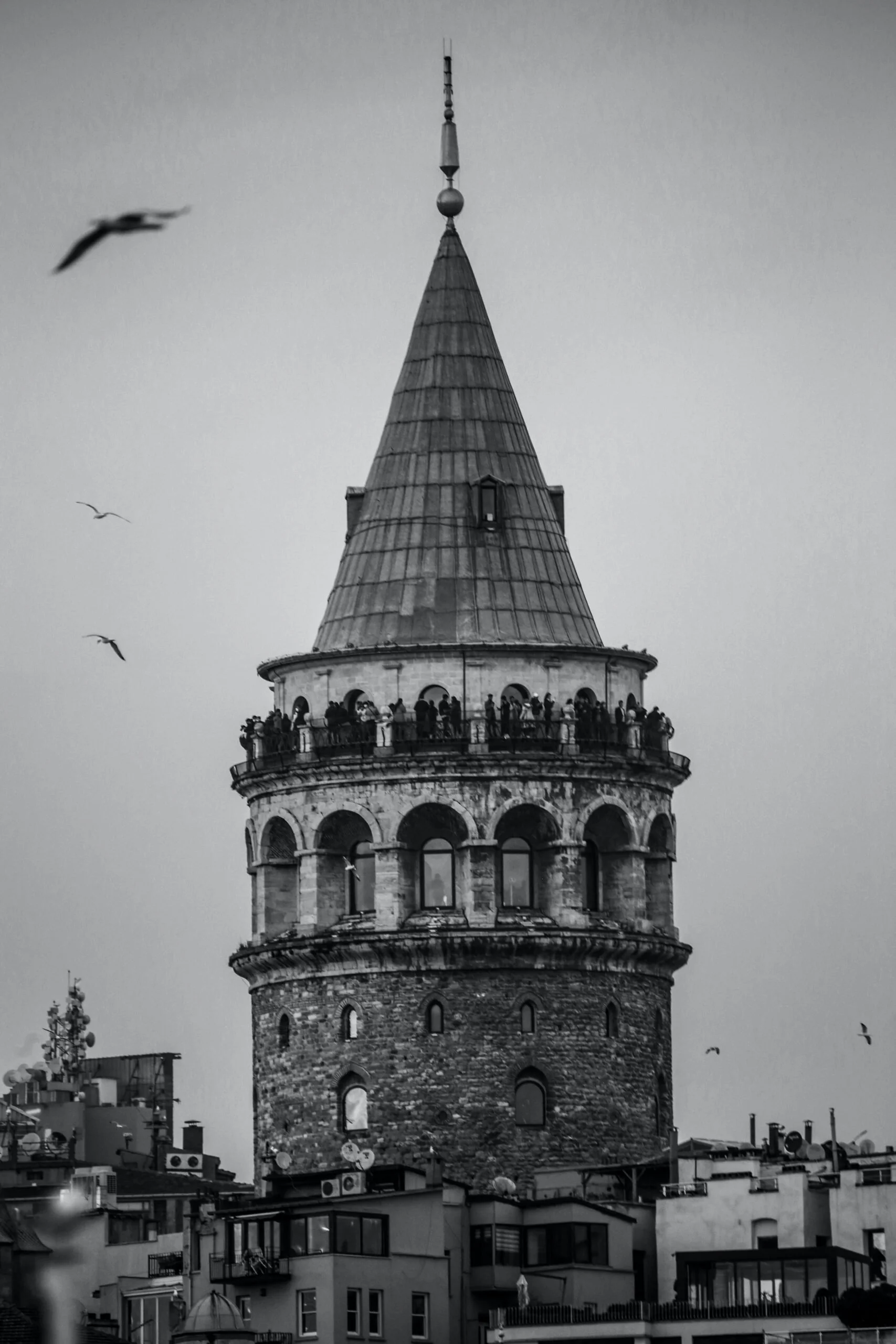
Galata Tower stands tall over the city's skyline, a 14th-century medieval stone tower that has watched Istanbul transform across the centuries. The view from the top is nothing short of breathtaking — the Bosphorus stretching out before you, the city sprawling in every direction, two continents visible at once. It is the kind of view that puts everything into perspective.
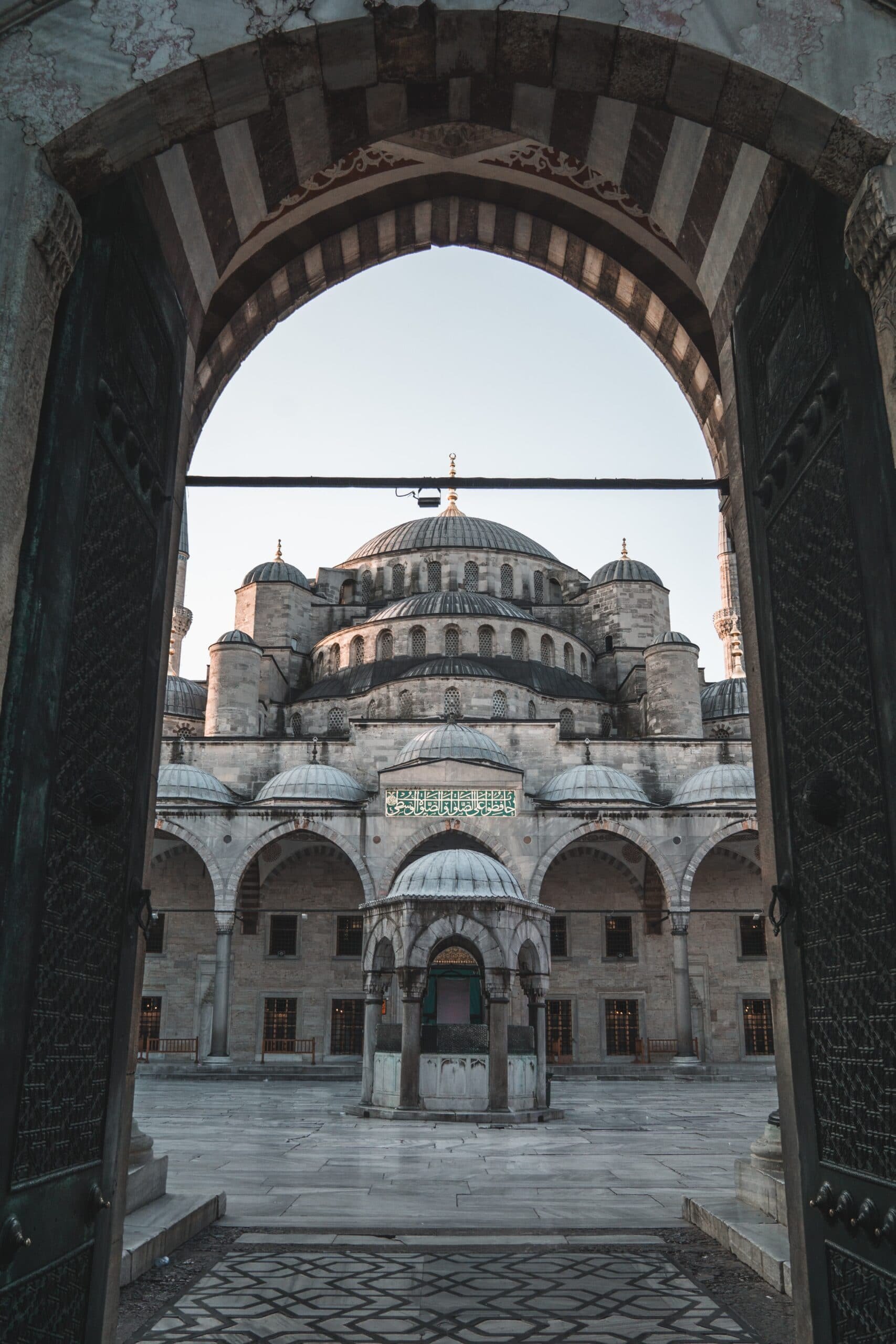
The Blue Mosque is perhaps the most iconic silhouette in all of Istanbul. Built in the early 17th century during the reign of Sultan Ahmed I, it is the only mosque in the city to boast six minarets, a detail that caused quite the controversy at the time of its construction. Step inside and you will immediately understand how it earned its name, over 20,000 hand-painted blue Iznik tiles line the interior, casting the space in a soft, ethereal light that feels almost otherworldly. Unlike many of the city's historic sites, the Blue Mosque remains an active place of worship to this day, which gives it a living, breathing quality that no museum can replicate. There is something profoundly humbling about standing beneath its domes, surrounded by centuries of faith and artistry, and simply being still for a moment. If Istanbul has a soul, you will find a piece of it here.
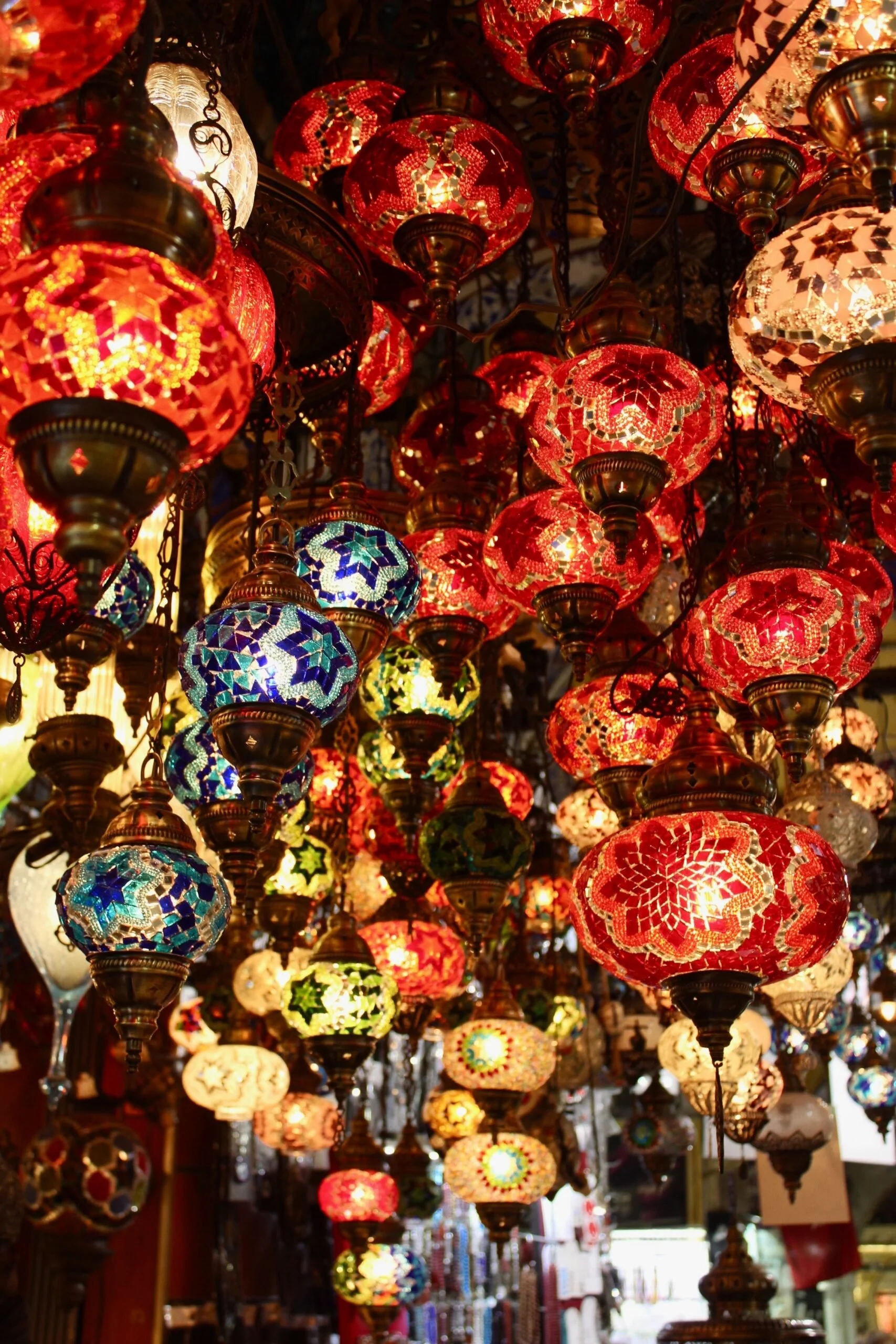
The Grand Bazaar is one of the oldest and largest covered markets in the world, and stepping inside it feels like stepping into another time entirely. Over 4,000 shops line its labyrinthine streets, filled with spices, textiles, ceramics, jewellery and everything in between. But beyond the shopping, it is the atmosphere that stays with you, the sounds, the smells, the energy of a place that has been alive with commerce and conversation for over five centuries. Go without a plan, get a little lost, and let it reveal itself to you.
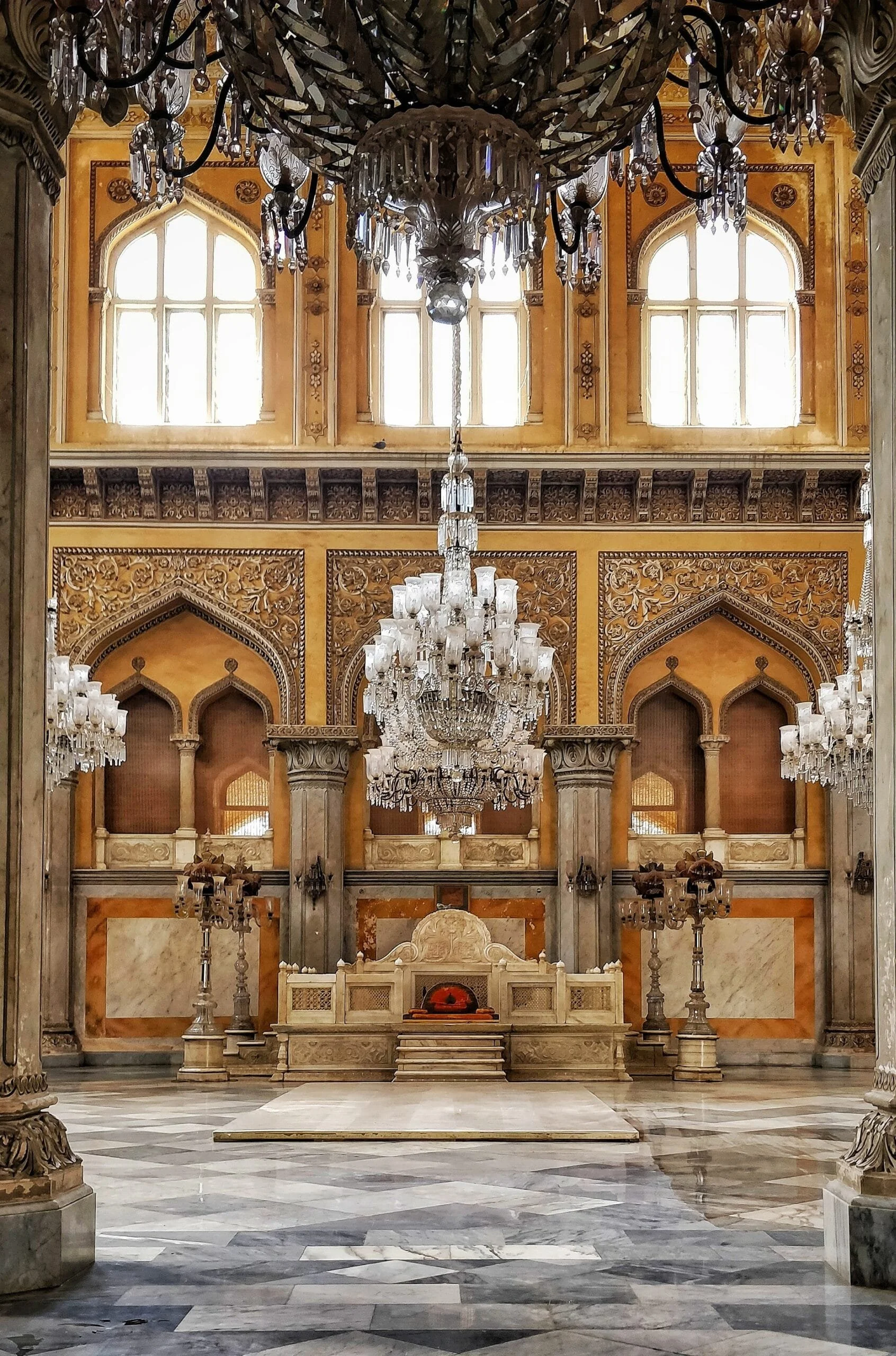
Topkapı Palace was once the beating heart of the Ottoman Empire - the seat of power for sultans who ruled over vast stretches of the world. Walking through its courtyards and chambers today, it is impossible not to feel the enormity of what once happened within these walls. The decisions made here shaped empires, ended wars, and changed the course of history. It is now one of the world's great museums, and every corner of it tells a story.
