
The Origin Story of Amsterdam
Or: How I Became a Tourist in My Own City - and Fell in Love
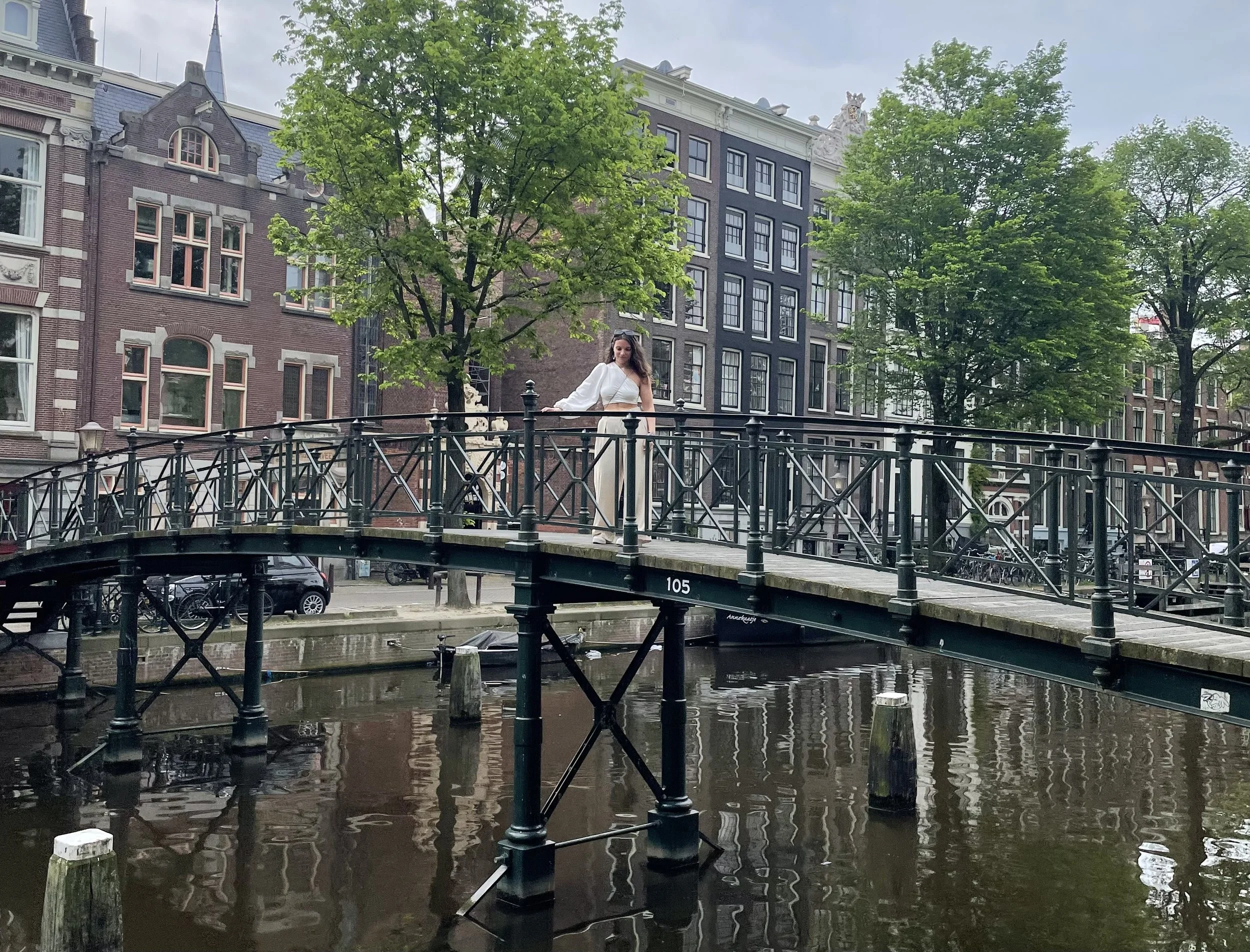
There's a legend that Amsterdam was founded by two fishermen.
They were caught in a storm on the Zuiderzee - the wild inland sea that once crashed against the coast where Central Station now stands - and their little boat was thrown toward the mouth of the Amstel River. As the story goes, their dog leapt from the bow, landed on a mound of clay, and promptly threw up.
And that, supposedly, is where the city began.
I love this. Not because it's true - nobody knows if it's true - but because it's such an Amsterdam origin story. No great conqueror. No divine prophecy. Just two ordinary men, a seasick dog, and a patch of mud that happened to be in the right place at the right time.
A city that began by accident. A city that became one of the most extraordinary places on earth, not because someone planned greatness, but because the people who washed up here kept choosing to build something remarkable out of the mess they landed in. Reminds me of someone…
I've lived in Amsterdam for a while now. Long enough to have a favourite bench at the Hortus Botanicus. Long enough to know which side of the Prinsengracht gets the afternoon sun. Long enough for the canals to feel like wallpaper - beautiful, yes, but invisible. The way your own home always is.
And that's the problem.
When you live somewhere, you stop reading it. The crooked houses become a backdrop to your commute. The bridges become shortcuts. The church towers become landmarks you use to orient yourself when you've had one too many wines at dinner, not monuments that have been standing since before your country existed.
Lars and I had been talking about this for weeks. We'd both chosen Amsterdam. We'd both moved our lives here. But neither of us could honestly say we knew it, not the way we knew the cities we'd visited as travellers, with that wide-open hunger to understand everything. We'd never given Amsterdam the same curiosity we'd give Istanbul or Bath or Spain.
So one morning, we did the most radical thing two Amsterdam residents can do.
We bought a Museum Card.
And we became tourists in our own city.
Where It All Began
If you want to understand a city, you have to find its oldest story. Not the polished version on the tourism website - the real one. The one that tells you who these people were before the rest of the world was watching.
In Amsterdam, that story begins at the Oude Kerk.

The Old Church. The oldest building in the entire city. And it stands - of all places - in the middle of the Red Light District.
I'll come back to that. Because that detail is not a coincidence, and it tells you more about Amsterdam's soul than any guidebook ever will.
But first: the building itself.
The Oude Kerk started as a wooden chapel around 1213 (for context - that is eight hundred years ago!), built by fishermen on a mound of clay at the place where the Amstel met the IJ. This was before Amsterdam was Amsterdam. Before the canals, before the Golden Age, before any of it. Just a handful of families living on a soggy river delta, pulling herring from the water and praying to Saint Nicolas, the patron saint of sailors - that the sea wouldn't swallow them whole.
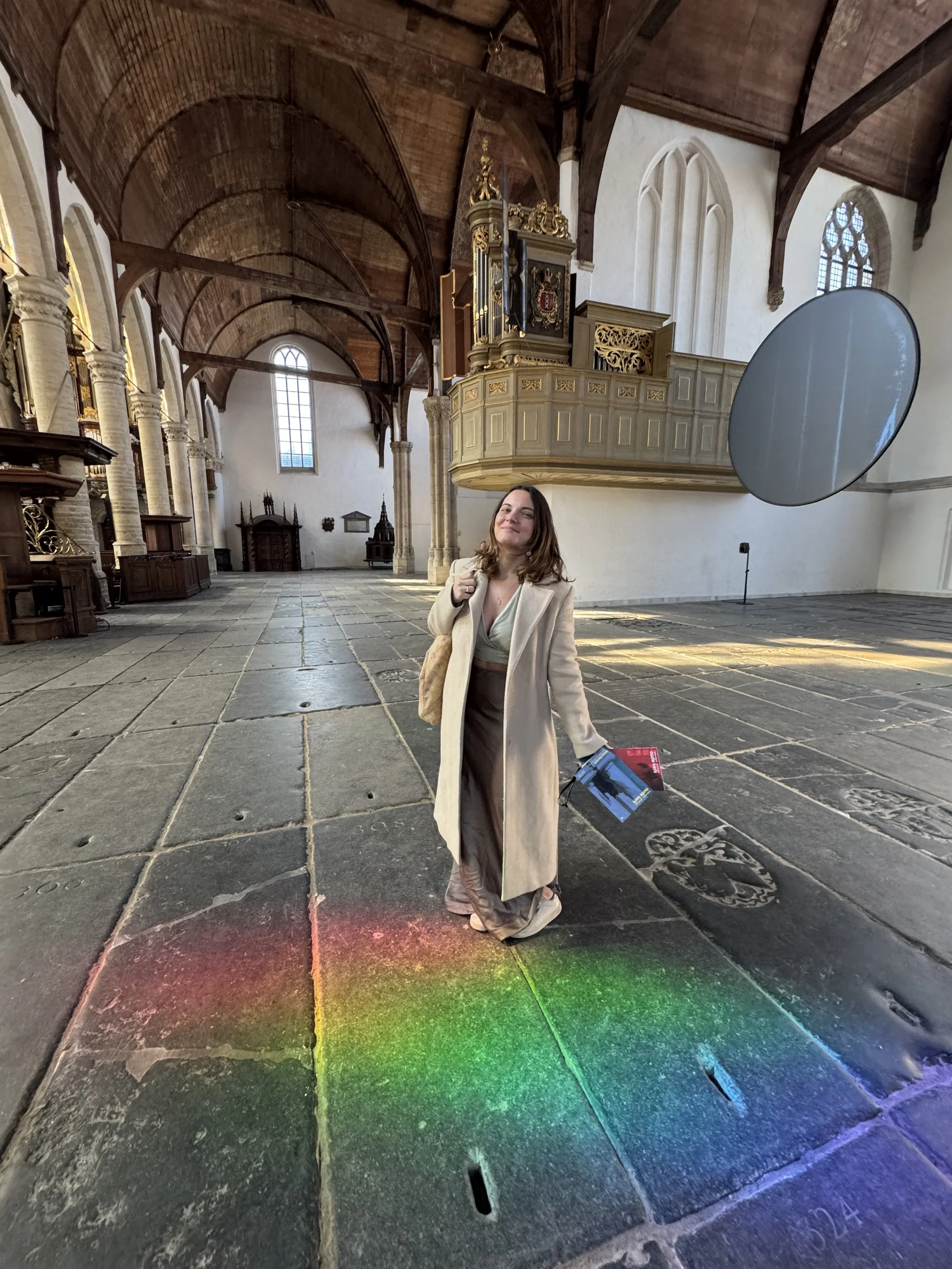
By 1306, the wooden chapel had been rebuilt in stone and consecrated as the Sint Nicolaaskerk. The bishop of Utrecht came to bless it. And slowly, over the next three centuries, it grew - just like Amsterdam itself - not according to some grand plan, but because the people who lived here kept adding on. A new aisle here. A chapel there. The choir extended, then wrapped in a half-circle, then vaulted with a ceiling made of Estonian oak planks that still hang there today - the largest medieval wooden vault in all of Europe.
Lars and I stood under it and just... looked up. There are faded paintings from the fifteenth century on those planks. They're the only decoration that survived what came later - the Beeldenstorm of 1566, when a wave of Protestant fury swept through the church and smashed every statue, every painting, every altarpiece within reach. The only art that was spared was the art they couldn't get to. The ceiling was too high.
And now that ceiling is all that's left of the Catholic church this once was. Walk in today and the Oude Kerk feels almost empty - vast, white walls, soaring columns, light pouring through the windows into what one writer described as a space stripped bare like a gymnasium (I kinda agree….). The Reformation didn't just change the church's religion. It changed its face. Everything ornate was ripped away. What remained was something stark and haunting, a kind of beauty born from destruction, which is something Amsterdam knows a lot about.
But here's the detail that got me.
The floor.
You walk across it without thinking, and then someone tells you - and you stop mid-step - that the entire floor is made of gravestones. Two thousand five hundred of them. Beneath your feet are sixty thousand Amsterdam citizens. Six centuries of the dead, buried in layers under the church they built. Rembrandt's wife, Saskia van Uylenburgh, is down there, grave number 29 (you can go say hi to her!), and every year on the ninth of March, the early morning sun slips through a window and briefly illuminates her tomb. Just for a moment. Just enough.
I thought about that for a long time. A church built on the bones of the people who built it. A city that carries its dead not in some distant cemetery but directly beneath the feet of the living. There's something very sincere about that. Very warm. So Amsterdam.
The Miracle That Made a City
Here's where the myth comes in, and the power of a mythical story.
In 1345, Amsterdam was barely a city. A thousand people lived here- fishermen, mostly, and a few traders - in wooden houses clustered around the dam on the Amstel. Four streets and a handful of alleys. The monastery was the biggest building in town.
On the twelfth of March, a fisherman named Ysbrant Dommer lay dying in his house on what is now the Kalverstraat. A priest was called to give him the last rites and Holy Communion. But the dying man couldn't keep the Host down, he vomited it into the fire beside his bed.
Here's where it gets strange.
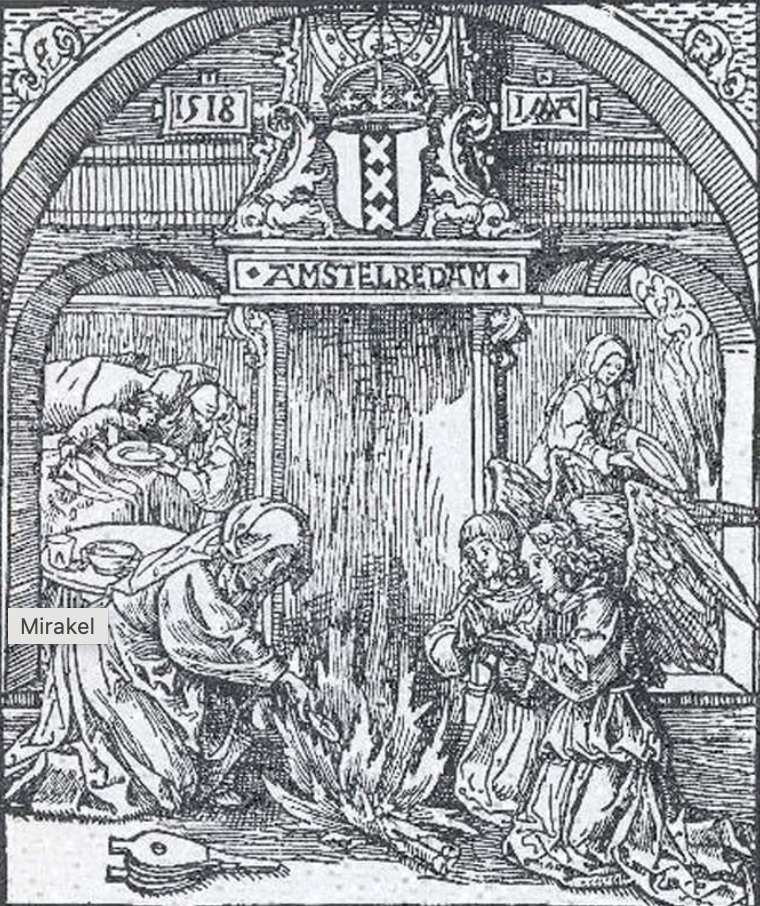
The fire burned. Everything around the Host turned to ash. But the Host itself, the bread of the Eucharist, did not burn.
The women tending to Ysbrant pulled it from the flames, unscathed. They placed it in a chest and carried it to the Oude Kerk. The next morning, the chest was found empty, the Host had returned to the house on Kalverstraat. They carried it back. It returned again. Three times this happened before the church finally kept it, and the Miracle of Amsterdam was declared.
Pilgrimage print – Jacob Cornelisz van Oostsanen date 1518
Now. You can believe this or not. That's not the point. (I have my doubts…).
The point is what happened after.
Word of the miracle spread across Europe. Pilgrims began arriving in their thousands; from Germany, from Flanders, from France - all of them walking the Heilige Weg, the Holy Way, that was built specifically to handle the traffic. Amsterdam, this tiny fishing settlement on a soggy river mouth, was suddenly on the map. The pilgrims needed food, lodging, churches, roads. The money flowed. The city grew.
A miracle - real or not - turned a village into a destination. A story changed the trajectory of a place.
If that's not proof that how you read the world shapes how you live in it, I don't know what is.
Every year, Catholics still come to the Oude Kerk in mid-March to celebrate the Miracle. The Stille Omgang - the Silent Procession - moves through Amsterdam in the dark. No banners. No singing. Just a quiet walk through the streets in the middle of the night, remembering a story that happened nearly seven hundred years ago.
The City That Built Itself
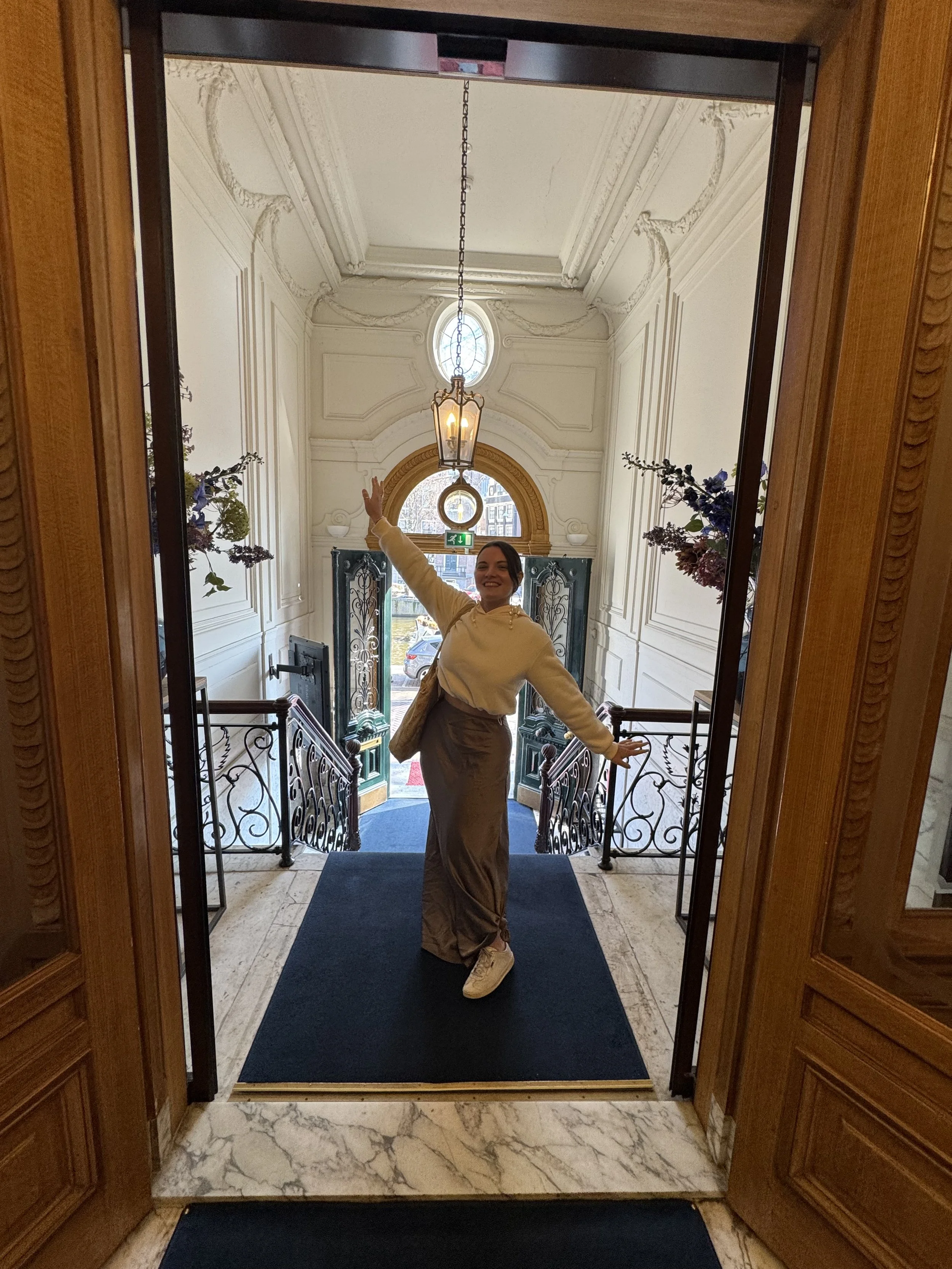
After the Oude Kerk, Lars and I walked to the Grachtenhuis - the Canal Museum - on the Herengracht. And this is where the origin story of Amsterdam truly cracked open.
The museum is small. You walk through five darkened rooms with an audio guide, and in forty minutes they take you through four hundred years. But what those forty minutes did to the way I see this city - I can't overstate it.
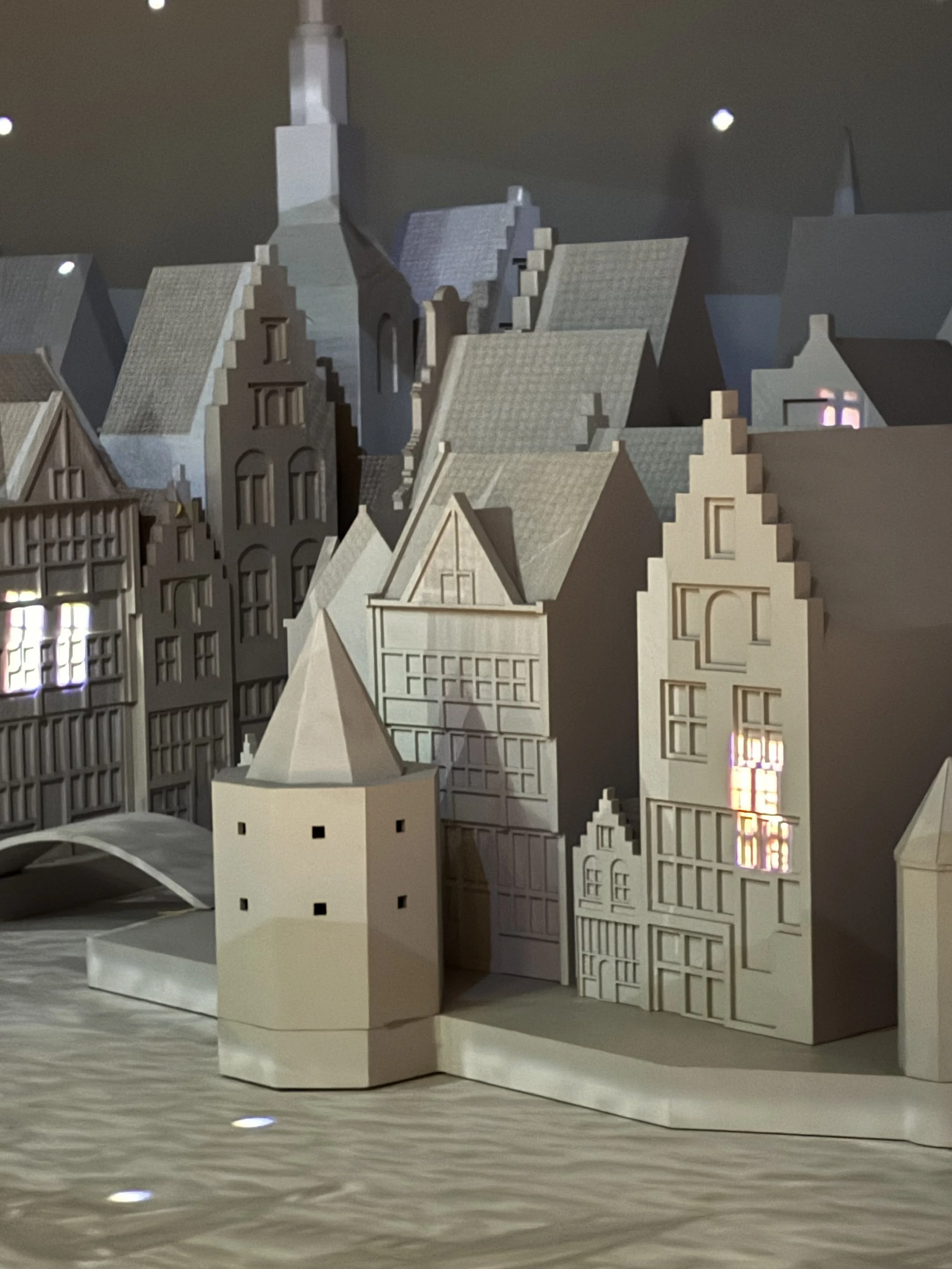
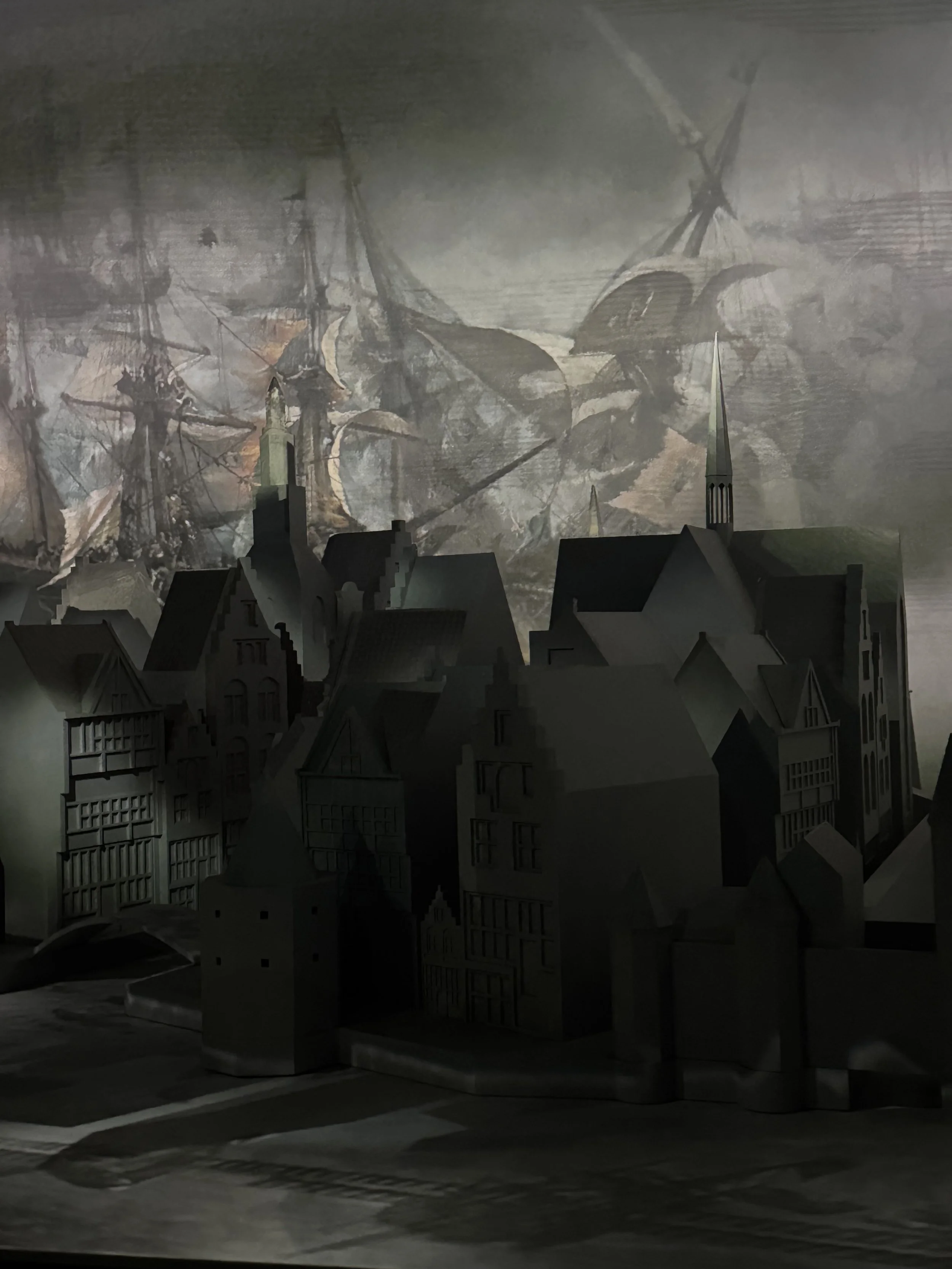
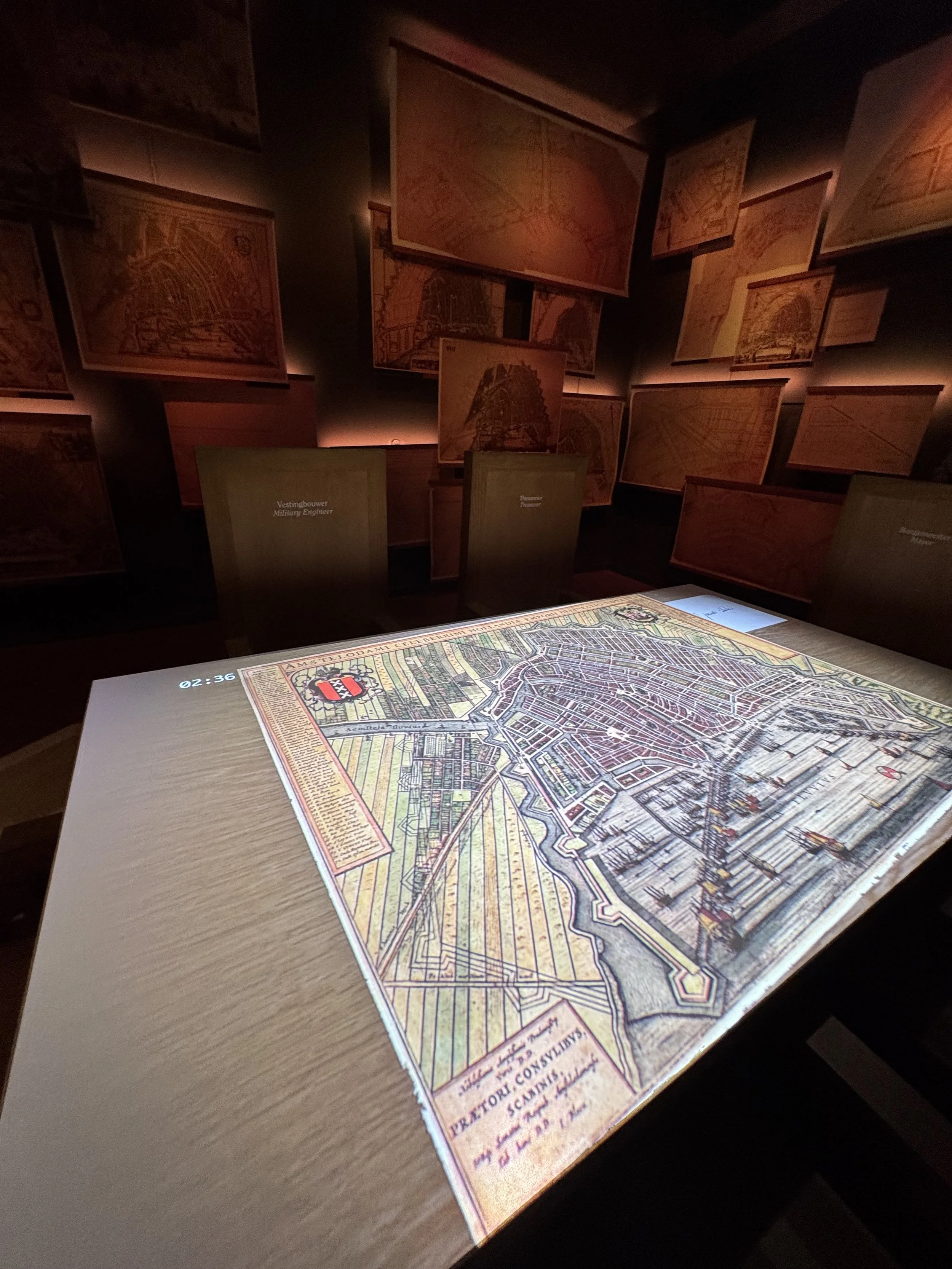
Here's what I learned.
Amsterdam was never supposed to be this. It was a fishing village on a swamp. The land was so wet that every building had to be hammered into the ground on wooden piles - forests of them, driven deep through the mud until they hit sand. The Royal Palace on Dam Square alone sits on 13,659 wooden poles. The whole city is, in a sense, floating. (Wild….)
But in the sixteenth century, something happened that changed everything.
The Reformation - which had been tearing through Europe for decades - finally reached Amsterdam. For a long time, the city had stayed Catholic while the rest of the northern Netherlands turned Protestant. But the tension was unbearable. The Spanish King, Philip II, was trying to crush Protestantism with the Inquisition. The people of the Netherlands - led by a man called William of Orange - revolted.
William of Orange. The Silent. Father of the Fatherland. (I finally understand why we all wear orange on Kingsday!)
He wasn't born Dutch. He was a German prince who grew up at the Spanish court and inherited the principality of Orange in the south of France. He was raised Catholic, converted to Lutheranism, then to Calvinism - not because he was fickle, but because he believed, with a stubbornness that would eventually get him killed, in one radical idea: that people should be free to believe whatever they want.
He led the Dutch Revolt against Spain, the Eighty Years' War, and it was brutal. His three brothers were killed in battle. He was declared a traitor by Philip II, who put a price on his head. And in 1584, a French Catholic zealot shot him dead in Delft.
But his idea survived.
In 1578, Amsterdam finally turned. The Alteratie (the Alteration), swept the Catholic city council from power and replaced it with Protestant rule. The churches were stripped. The monasteries confiscated. Catholic worship was banned from public life.
And yet - and this is the thing that makes Amsterdam Amsterdam - the city didn't become a place of persecution. It became a place of tolerance. Not perfect tolerance. Not by a long stretch. But a tolerance that was extraordinary for its time. Behind their doors, people could believe whatever they wanted. The authorities knew. They looked the other way.
Jews expelled from Spain and Portugal came to Amsterdam. Huguenots fleeing France came to Amsterdam. Dissenters and freethinkers and traders from every corner of Europe came to Amsterdam because Amsterdam let them in. And they brought their money, their skills, their ideas.
That's how the Golden Age began.
By 1602, Amsterdam had founded the Dutch East India Company, the first multinational corporation in history. Over half its start-up capital came from Amsterdam residents, from bakers to bankers. The population exploded from 40,000 in 1600 to over 210,000 by 1662. The city was bursting at the seams.
And that's when they built the canals.
Standing in the Canal Museum, looking at the model of how the canal belt was planned - the Herengracht, the Keizersgracht, the Prinsengracht, ring after ring of water radiating outward from the medieval centre - I felt something shift in the way I see this city. Those canals aren't just pretty. They're the physical evidence of a moment when a tiny, soggy, accidental city decided to think bigger than it had any right to. When the richest merchants in the world built their houses along the water and planted linden trees and created something so beautiful that, four hundred years later, it would be named a UNESCO World Heritage Site.
A room in the museum has the floor made of sand because that's what Amsterdam is built on. Another room shows a model of wooden piles being driven into the marshy ground. Lars turned to me and said: This whole city is an act of trust.
He was right. Every building in Amsterdam is a bet that the ground will hold.
The Extraordinary in the Ordinary

I saved the best for last.
Back toward the Red Light District. Past the Oude Kerk. Down a narrow canal on the Oudezijds Voorburgwal. Number 40. From the outside, it looks like any other seventeenth-century merchant house. Tall, handsome, unremarkable.
And that's exactly the point.
This is Ons' Lieve Heer op Solder. Our Lord in the Attic. A complete Catholic church hidden in the top three floors of a canal house, built at a time when Catholic worship was forbidden.
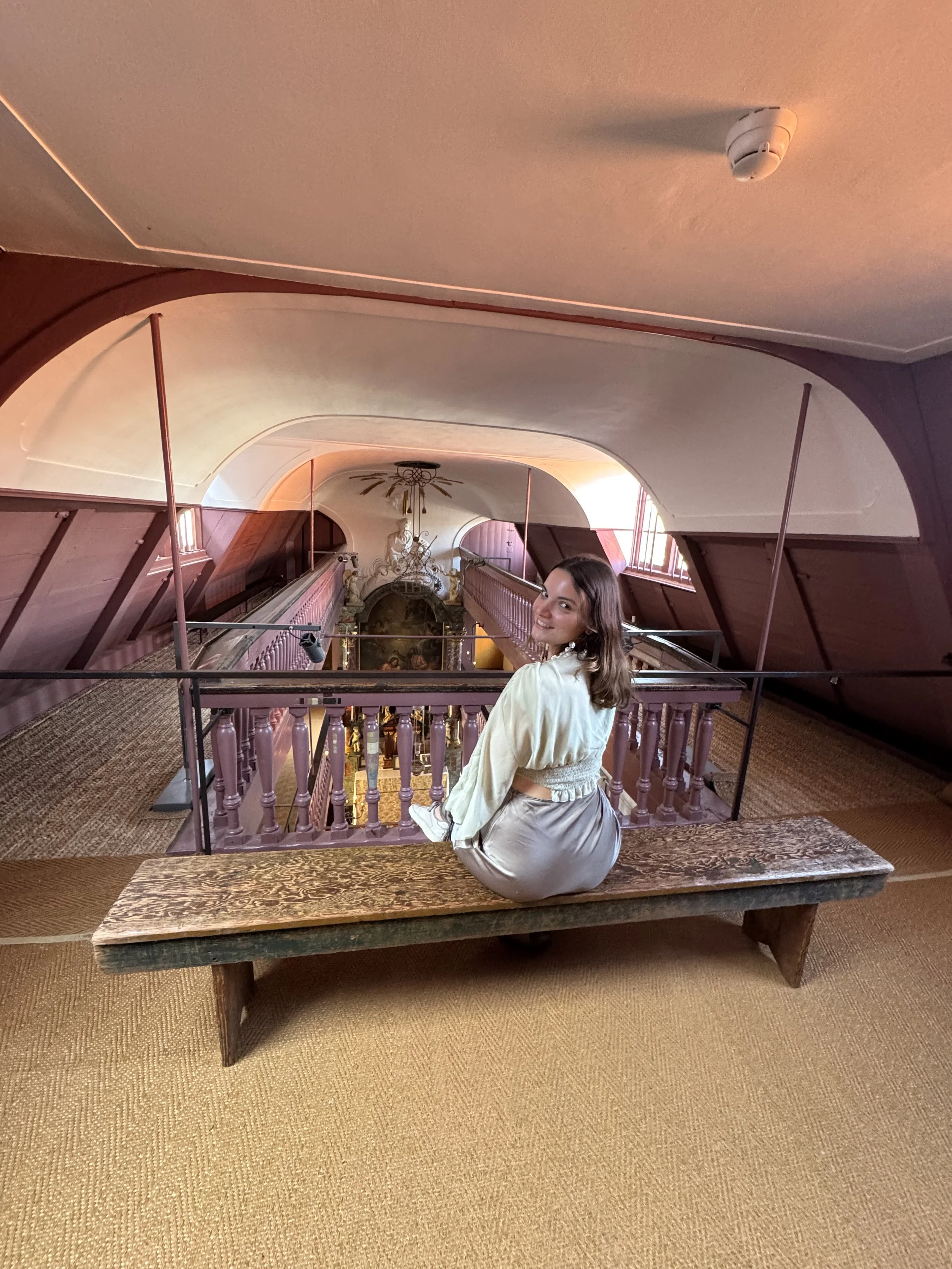
The man who built it was called Jan Hartman. He came to Amsterdam from a town called Coesfeld in Germany as a baker's apprentice and worked his way up to become a wealthy merchant. In 1661, he bought three adjoining houses and converted their combined attics into a place of worship. From the street, you'd never know.
You climb narrow stairs through his home - past the front room with its marble fireplace where he entertained guests, past the family crest he'd designed himself (a deer for Hartman, a compass for his wife, whose father made compasses - because even a self-made man needs a coat of arms), past tiny bedrooms and tiled kitchens. And then the ceiling opens up and you're standing in a church.
A proper church. Baroque altar. Marble columns. Carved angels holding lilies. A painting of the Baptism of Christ by Jacob de Wit. An organ from 1794 that's still played today. Space for over two hundred people - two hundred Catholics climbing those narrow stairs every Sunday to worship in a space that, from the outside, was just a house.
A baker's apprentice who built himself a life, and when the world told him he couldn't practice his faith, he didn't leave. He didn't fight. He built a cathedral in his attic. And it's been there ever since - for over three hundred and sixty years - on a street I must have walked down a dozen times without ever looking up.
This is the thing about Amsterdam that I'm only beginning to understand. The extraordinary isn't hiding here. It's everywhere. On every street, behind every door, under every floorstone. It's just that we stop looking. We walk past it on the way to the supermarket. We cycle over it. We live on top of it.
The magic doesn't need to announce itself - it's been here the whole time, waiting for someone to care enough to notice.
Because here's what I can't stop thinking about: you walk out of Jan Hartman's secret church and you are standing in the Red Light District. The red-lit windows are right there. The neon glow and the narrow alleyways and the women behind glass - all of it, steps away from a place where people have been praying since 1663.
And neither one has ever moved.
Churches and red lights. Prayer and desire. Most cities would call that a contradiction. Most cities would have separated them by now - torn one down or pushed the other to the edges.
But standing there, between Jan Hartman's secret altar and the neon glow of De Wallen, I don't think it is a contradiction. I think they're the same thing.
Reverence.
One is reverence for faith. The other is reverence for human nature. And Amsterdam - this strange, soggy, beautiful city - decided centuries ago that both of those things can be secret and deserve a place. That you don't get to honour one and pretend the other doesn't exist. That a city built on tolerance has to mean all of it - the prayers and the desires, the churches and the red lights, the divine and the human - it is home it all of it, equally.
Falling in Love
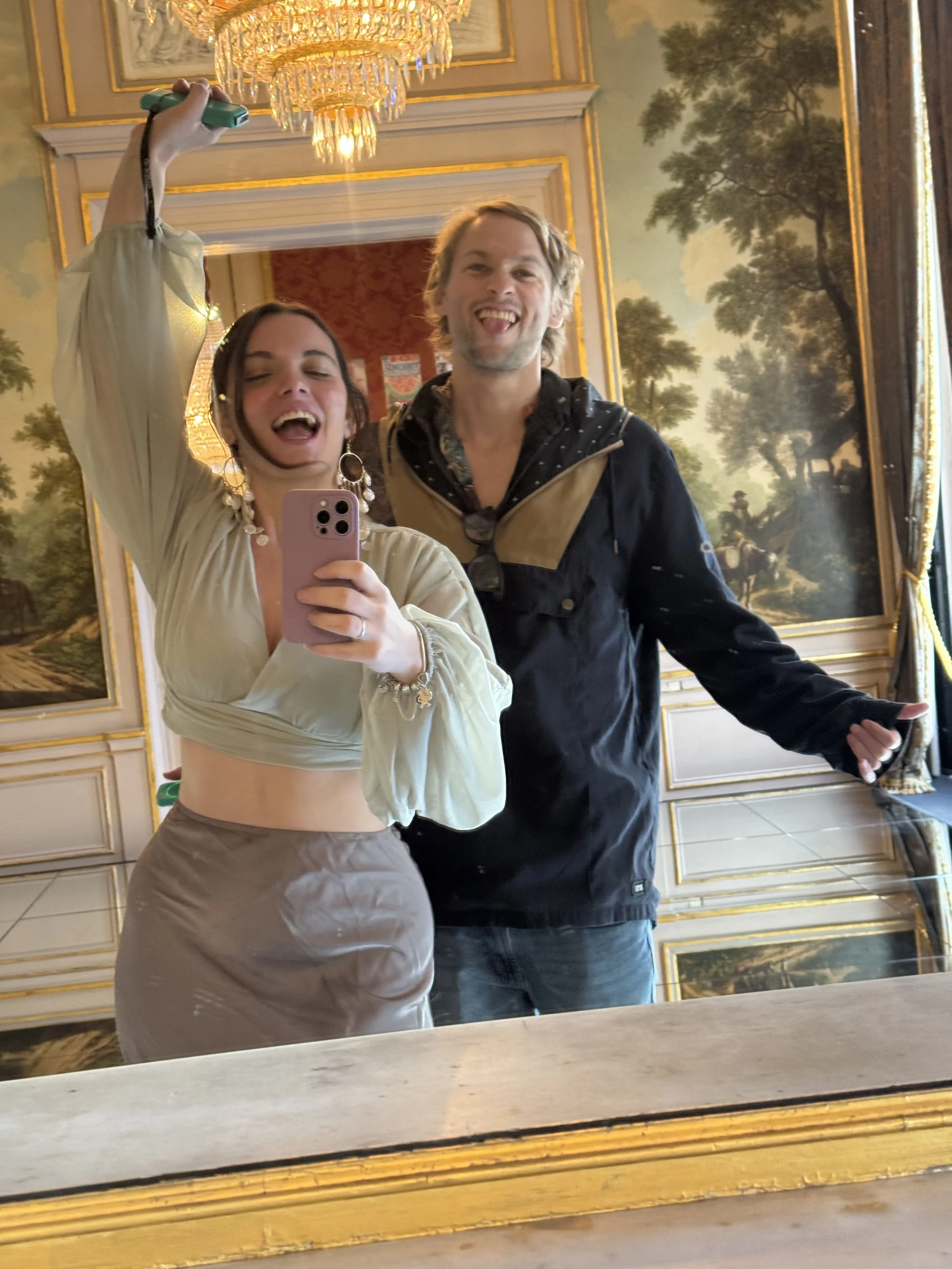
We walked home in the sun. We got ice cream. We didn't say much.
But my heart was full in a way it hadn't been before, not in all the months I'd lived here. Because spending a day getting to know Amsterdam - really knowing it, for the first time - didn't just teach me about this city. It made me feel like I belong here.
This city has been an epicentre for greatness. It has welcomed the expelled, the different, the dreamers, the restless, the devout and the desirous - for centuries. It built itself on a swamp and said: come anyway. It created a culture where guilt and shame don't get the last word. Where you are allowed to be all of what you are - the praying and the wanting, the ordinary and the extraordinary - and nobody asks you to leave any of it at the door.
I didn't just fall in love with Amsterdam that day. I felt more at home than I ever had before.
And that, I think, is the most magical thing a city can do.
Let’s Write!
Journaling prompt: Think about the place you call home - your city, your neighbourhood, your street. What have you stopped seeing? If you walked it tomorrow as a tourist, with fresh eyes and nowhere to be, what do you think you'd notice for the first time? Write about the moment you stopped reading the place you live in - and what you think you might find if you started again.
Creative writing prompt: A city is built on a single radical idea. Not democracy, not religion, not commerce - something stranger. Something human. Write the origin story of that city. What was the idea? Who believed it first? And what grew from it?
